A Division of the Reef Ball Foundation, Inc.
Reef Balls & Environmental Solutions for Erosion Control

Quick
Links


NEW: KML OR KMZ FILE OF ALL REEF BEACH PROJECTS FOR GOOGLE EARTH
(KMZ is compressed and requires unzipping)


FOR CAYMAN MARRIOT ONLY POWERPOINT PRESENTATION

Internet 
Brochure
For
Submerged
Breakwater
Applications

Authorized Contractors


Links


Home


Reef Balls As Submerged Breakwaters or for Erosion Control

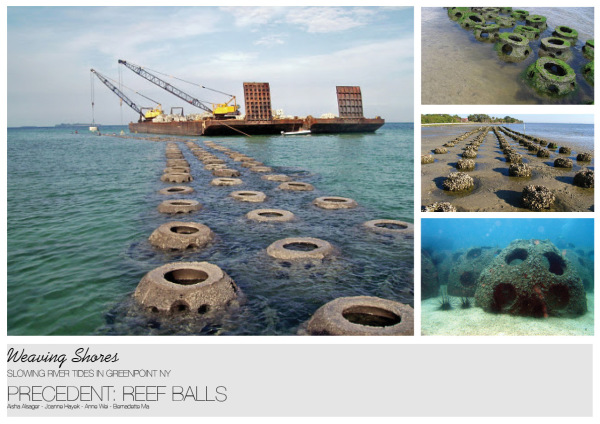
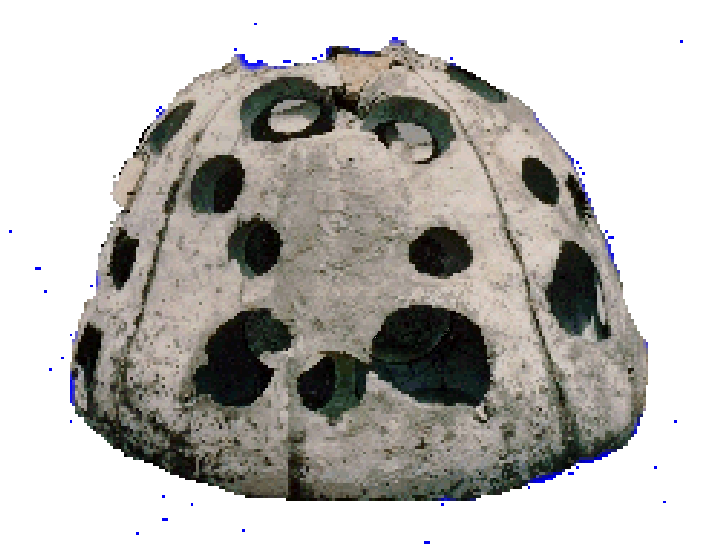
Reef Balls can be used as submerged breakwaters to protect a beach from erosion or even to build up a beach that has already eroded.  They can also be used in a variety of erosion control applications such as creating a wave fence for marinas or as red mangrove "pots" for shoreline stabilization.  Shorelines can also be stabilized using Reef Balls as a near shore breakwater or to grow oysters to create a protective near shore oyster bar.  However, all these applications for Reef Balls require specific engineering because erosion control requires detailed, site specific planning, to avoid unexpected results.

Even if molds or Reef Balls are obtained from The Reef Ball Foundation or an authorized Reef Ball Contractor,  The Reef Beach Company will provide the engineering and design services, mold licensing, final design approval and quality control whenever erosion control is one of the goals of a Reef Ball project.  If you have your own project engineer or engineering firm, we can serve as consultant to them to insure proper engineering.  There are specific mold changes that must be incorporated into Reef Ball molds before casting erosion control Reef Balls so please consult us in advance of any construction if you already have molds. Not all Reef Ball Foundation authorized contractors are also authorized for erosion control projects so check with us before selecting a contractor for your project.

Note that The Reef Ball Foundation handles only biological or educational applications for Reef Balls.  However, the Reef Ball Foundation may still be involved in your erosion control project when there are biological goals too...for example, if you are doing a coral propagation and transplant project on the surface of your reef ball submerged breakwater.  Note also that our "roots" in the Reef Ball Foundation mean that we only offer erosion control solutions that are environmentally sound.  One of the main reasons we developed this technology is to help avoid environmentally damaging beach "renourishment" projects.  In addition to solving your erosion problems,  you will enjoy the environmental benefits of using Reef Balls.  Reef Balls will function much like any other natural reef in similar waters,  providing fishery habitat, possibly snorkeling opportunities, and in coral reef areas you can even create a living coral reef system.  Many of our clients have even used Reef Balls as mitigation for activities such as building a dock or sanding pumping....now isn't that a switch? 

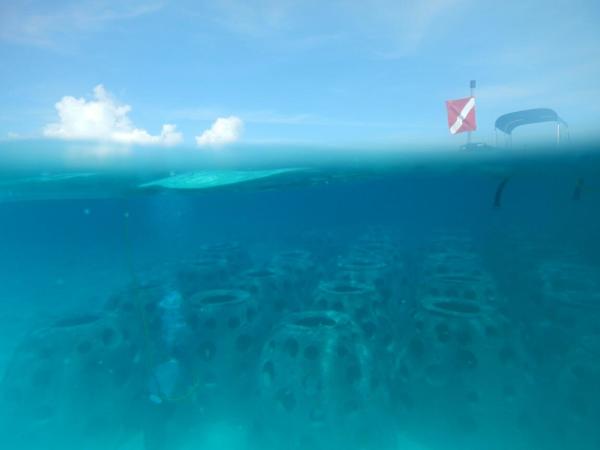
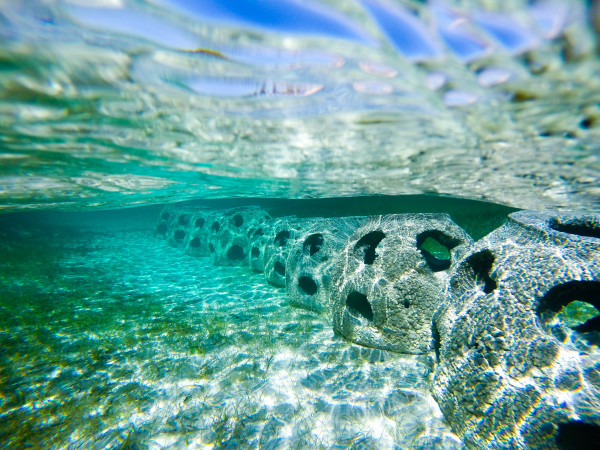
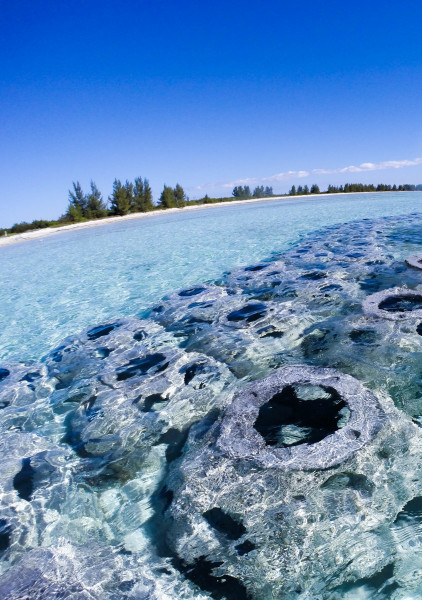
Right: Reef Ball in a submerged breakwater  showing biological
 growth of 4 months, note 2 soft corals and one finger coral were propagated and transplanted

Reef Balls are a modular system and it is possible to move or removed them in case that is needed, but because a living reef system will develop on the Reef Balls one should consider Reef Balls as a permanent feature.

Our assistance typically involves an initial on-site engineering and design evaluation which will produce a proposal that will include feasibility and initial cost range estimates.  There are engineering and design fees plus expenses for this initial evaluation that will be credited to the overall cost of the project if you accept the proposal.  We prefer for you to gather as much site specific data as you can before we arrive so that we can keep the initial visit fees low.  (Checklist of types of data we like to see)

Fish life is abundant in and around Reef Balls since they are designed specifically to create marine habitat.  Over 1/2 a million Reef Balls have been used in over 3,500 projects in 43 countries as designed artificial reef habitat.


How Do Reef Ball Submerged Breakwaters Compare to Traditional Submerged Breakwaters?

"Cost of Reef Balls verses rock breakwaters depends on local costs of
rock, concrete, and heavy equipment.  If rock is available nearby and
cheap, then it may be the lowest cost, depending on transportation and
deployment costs.  However, expensive and sometimes unavailable barges and
heavy equipment are needed to deploy the multi-ton rocks, whereas the Reef
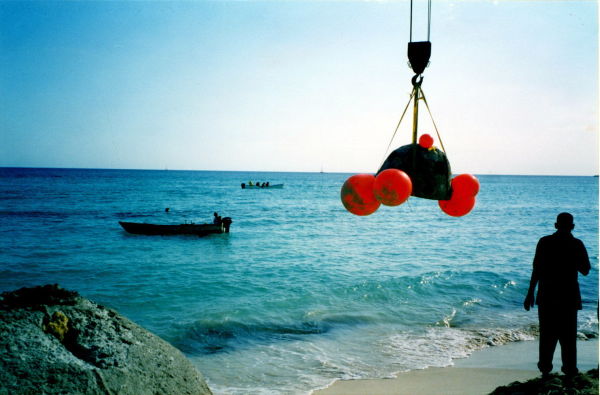
Ball units can be floated out from the beach.

Required widths are similar, but we are able to deploy Reef Ball
breakwaters in shallower water (1.5m to 2m water depths) due to being able
to anchor them into the bottom.  Rock breakwaters that would be submerged
may not be able to be built in that shallow water depth, so that would
make them taller and wider for the same protection.

Then there is the comparison of environmental enhancement, which will be
much better for the Reef Ball breakwater than just rocks..

Another factor is the overall permeability of the breakwater, which will
be much greater for a Reef Ball breakwater than a rock breakwater.  That permeability prevents the "ponding" effect that can occur behind a breakwater, where the overtopping of waves can create an increased water level behind the
breakwater, causing an accelerated return flow that can scour around the
ends of the breakwater, as well as washing sand out from landward of the
break water" -Dr Lee Harris, ..

Scroll down the page to your specific erosion control project type or click on the following list to automatically jump down the page.


Submerged Breakwater Application

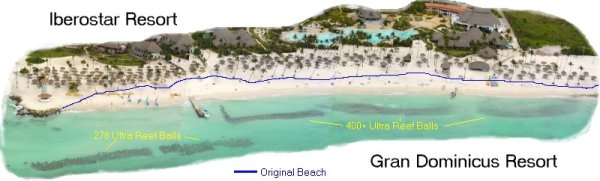
Increased beach width in the Dominican Republic Project from 1998 to 2001 at center of project - looking west, this was the result of natural accretion of sand by the Reef Ball submerged breakwater and not a sand renourishment project. 

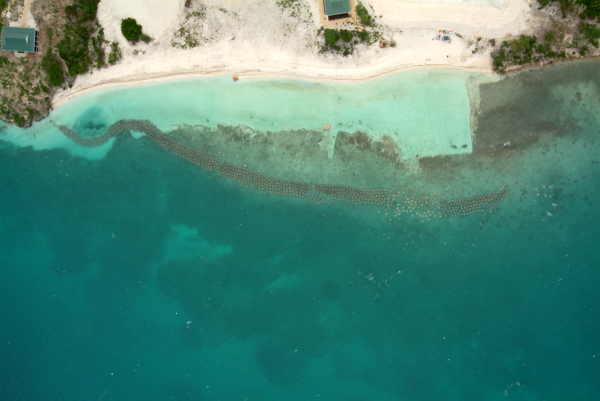
To fully understand the full scope of Reef Balls as submerged breakwaters, it is best to study carefully our prior projects.  The one project that does the best at demonstrating all the different options is the Antigua Maiden Island Submerged Breakwater and simultaneous reef restoration project. Go to http://www.reefball.com/map/antiguascience/antiguapressrelease.htm and spend some time looking at the areas that are of the most interest for your project.  There are detailed sections on the engineering, anchoring, construction, deployment, coral propagation, coral rescue, coral transplant, mangrove planting and other components of this particular submerged breakwater system.  

We have a great deal of experience in using Reef Balls for submerged breakwaters and have carefully developed the technology in more than a dozen different submerged breakwater test projects over a 10 year period to ensure we could offer a genuine solution .  Dr. Lee Harris of the Florida Institute of Technology and a leading expert in submerged breakwater technologies has overseen all of these projects.  His expertise will help to ensure all of our clients are provided with the best possible solutions (Reef Balls or other technologies) for their specific project goals.   

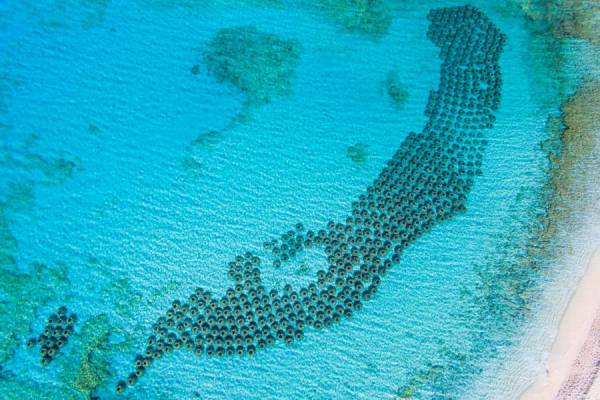
The basic premise of Reef Ball submerged breakwaters is to mimic natural reef systems and their ability to attenuate waves so that (beach) erosion is managed by natural like processes.  The exact amount of attenuation needs to be engineered for each project and is controlled by depth, wave climate, number of rows of Reef Balls, spacing of Reef Balls, etc.  There have been very extensive wave tank studies to allow us to custom design the desired wave attenuation for a specific project.  

(Above Right: Army Corp of Engineers Wave Tank in Vicksburg, Mississippi performing complex modeling studies for the Reef Ball submerged breakwater in Miami. Sample data here in Excel format)

In our most recent projects, (Miami and Antigua) we developed a much broader range of anchoring technologies which for the first time allows the use of Reef Balls as submerged breakwaters on a wider variety of bottom types...including deep sand bottoms.  Essentially, we now have technology that not only stops lateral movement of Reef Balls during storm events, but also prevents settlement into the sand (which has been one of the major obstacles facing submerged breakwater designers in the past.)  We have also develop a much larger range of Reef Ball sizes to handle beaches that have steeper slopes.  Even so, Reef Balls as submerged breakwaters may be too costly for areas that require the submerged breakwater to be in deeper than 3 meters.

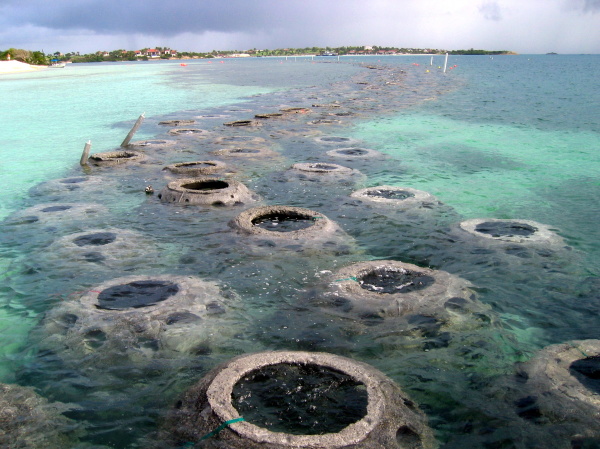
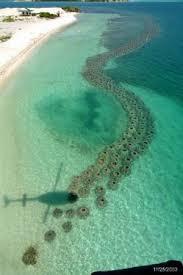
Mayan Palace, Q.Roo, Mexico (1200 Units)
[Right]

After studying the grandiose Antigua project, you will probably want to review more information from our prior projects below. 

These are not presented in any particular order, but you will find the farther back in time you go, the less the product was developed technically.  

Antigua, Maiden Island (1200 Units) [Left]

All of the following reports give excellent, non-censored views into using Reef Balls as submerged breakwaters.  The Army Corp Technical Paper is the best single source for understanding the basic concepts.  Other reports are either site specific or proposals for new sites...some with very unique problems like "Proposal for Reef Ball Submerged Breakwater" that show some of the design variations possible with Reef Ball submerged breakwater technology.  Obviously, your site will require some custom engineering...but this will help you understand what is involved in a project.  

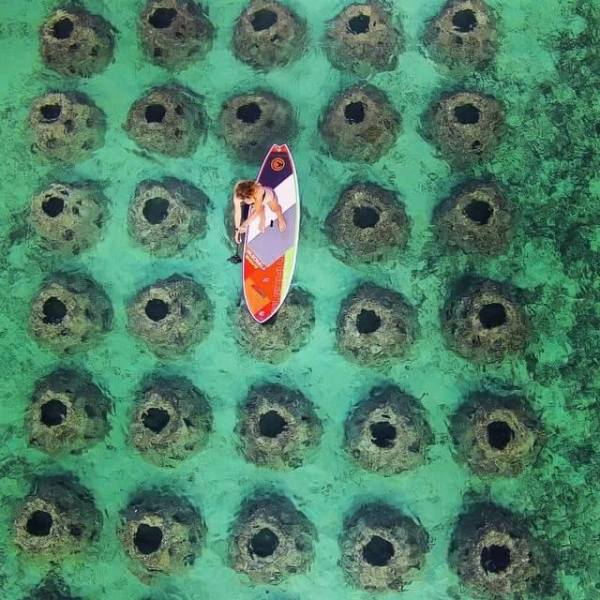
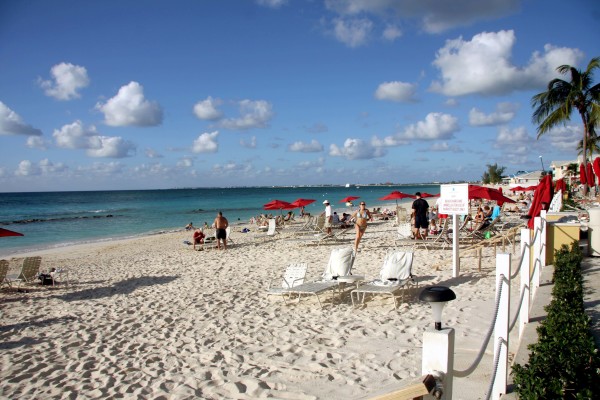
Marriott Hotel, Grand Cayman Island. (200 units)
[Right]


Additional Submerged Breakwater Projects:

Porto Progresso, Mexico

Miami Beach, FL

Canola Hilton, Dominican Republic (under construction)

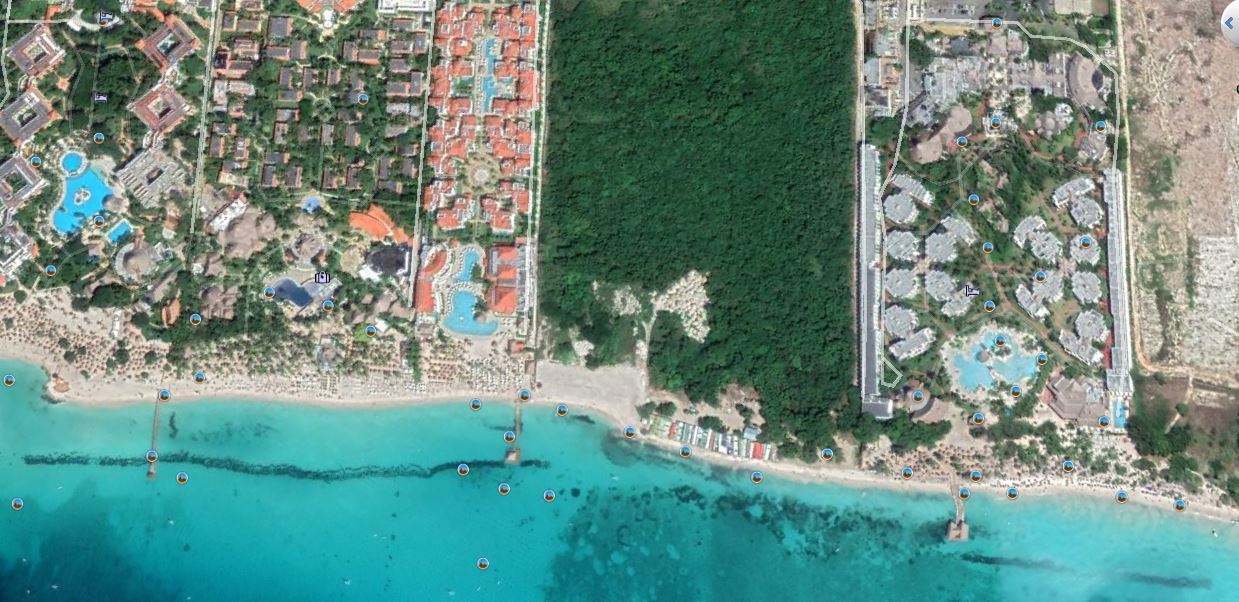
Iberostar Hotel, Dominican Republic

Gran Dominicus Hotel, Dominican Republic

Qaro Island, Kuwait

If you are ready to consider a submerged breakwater project, please visit our submerged breakwater brochure page for process details and then contact us "to get the ball rolling."


Reef Balls as Wave Fences for Marinas

Square Reef Balls (for stacking) or standard Reef Balls if depths are shallow can be used to create wave fences around marinas to help calm wave action inside a marina.  By using a "double walled" Reef Ball instead of a standard vertical or horizontal slat wave fence, you can create fish habitat and have a fence that does not require maintenance or regular replacement. There are often permitting advantages to using environmentally accepted Reef Balls instead of wooden structures that can cause dangerous debris in the ocean as they deteriorate.    Reef Balls are often used in front of sea walls to help disperse reflective wave energy  and to help mitigate for the shoreline habitat loss when a seawall is built.  The basic difference between a Reef Ball wave fence and a Reef Ball submerged breakwater is that the tops of Reef Balls are emergent from the sea level to provide effective attenuation with a single minimal rows of Reef Balls. Because of this, the top of Reef Balls are often modified in these projects to accept, for example red mangrove seedlings  (propogules) or to be sloped in a manner to avoid injury of a person falling into the water.  

Additional Wave Fence/Marina Projects:

  • Sarasota Sailing Squadron Wave Fence Reef Ball Project (Proposed)


Reef Balls to create Oyster Bars for Shoreline Stabilization

Newly Installed Oyster Bar (before coverage by oysters)

In much the same way as submerged breakwaters can create living coral reefs in tropical waters, Reef Balls can be used to create oyster bars where oysters are common.  A big advantage of oysters is that they will add a great deal of size to each Reef Ball in just a few years creating a better, and natural looking breakwater.  Oysters have a large filter feeding capacity and can improve water quality too.  Smaller sized Reef Balls are used in bays and protected areas where wave climates are not that great or where the slope is very gentle into the water as pictured above.  In moderate climates, oyster reefs are best built inter-tidal sticking out of the water a low tide.  They can be built deeper, but oyster growth is slower.  If the climate is very cold, it is better to keep the units below the low water mark for protection from winter freezing.  Smaller sized Reef Balls are very cost effective and some sizes can even be deployed by hand.

Additional Oyster Bar Shoreline Stabilization Projects:

MacDill Air Force Base, Tampa

Bayshore Made Beautiful Project of Tampa Bay Watch

Tampa Bay Estuary Program - Bayshore Boulevard Reef Installation

Ballast Point, Tampa: Oyster Breakwater Project


Reef Ball Covered in Oysters in just one year


Reef Balls as Red Mangrove planters for Shoreline Stabilization [See WWW.MANGROVESOLUTIONS.COM for full details of high energy planting system] 

Red Mangroves are often planted along shorelines because they make excellent fishery habitats and can help stabilize a shoreline from erosion.  However, it is difficult to impossible to plant red mangrove seedlings in areas with a firm bottom.  Even with softer bottoms, smaller plants my be difficult to hold in place against wave forces before they establish themselves enough to survive.  Therefore, Reef Balls can be used as the "pot" into which red mangroves are planted.  They can be arranged much like a submerged breakwater to immediately begin protecting the shoreline while waiting for even better stabilization after the red mangroves start sending out protective prop roots.  Over time, the burlap bag will bio-degrade and the Reef Ball will be left as additional fish habitat inside the "walking" roots of the mangroves.  One can certainly use common methods to plant red mangroves if conditions are right but Reef Balls offer a wider range of possible planting sites and also avoids leaving plastic PVC pipes in the environment. 

Additional Red Mangrove Shoreline Stabilization Projects:

Mangrove Planting Project on Maiden Island, Antigua


Reef Ball Red Mangrove "Planter" (Lined with burlap to retain soil and with and optional fiberglass rebar anchoring rod pictured above).
(Available in 10 sizes).


Need more information? Contact us:
Reef Ball Foundation, Inc. D.B.A.
The Reef Beach Company
941-720-7549 (US Cell Phone)


Todd Barber, Acting President
reefball@reefball.com


Copyright ©1993 - 2007, Reef Beach Company. all rights reserved. See brochure page footer for information on patents, copyrights, trademarks and service marks referenced, but not indicated, on this page.